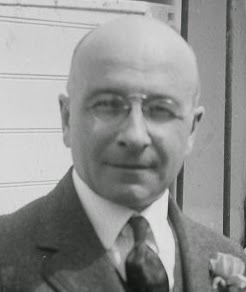
Dr. Alexis Carrel had everything going for him. He had a great job in Chicago in which his scientific genius was put to work with the likes of Charles Lindbergh, with whom he created the first heart profusion pump (artificial heart) in the early days of the 20th Century. He worked on amazing projects, like keeping a chicken alive for decades by replacing and rejuvenating its cellular structure, thus showing that cells, in a sense, need never die.
Using a small needle and very fine silk thread, he had developed the first successful technique for suturing blood vessels together, for which (along with his groundbreaking work on organ and blood transplantation) he won the 1912 Nobel prize in medicine.
But when World War II broke out, he, being a patriotic Frenchman, returned to France, where he had grown up and where, during World War I, had gone straight to the front lines, where he put his genius to work with Henry Dakin to create the Carrel-Dakin Method, an antiseptic treatment of wounds consisting of regular intermittent irrigation through surgically placed rubber tubes to avoid infection in contaminated wounds and to hasten healing.
He returned again to France just before the German invasion and occupation of his homeland, and remained in the unoccupied southern part of France, where the government there was allowed to continue under the watchful eyes of the Germans, who occupied the north and west of the country.
Carrel created a foundation there that would study human problems and seek solutions to them so society could advance and individuals could lead healthier, more productive (and happy) lives. After the war, he was, briefly, accused of collaborating with the Nazis (as was half of France) but was acquitted of all charges just before his death, brought on by stress, in 1944.
He was a man of great contradictions - a man of science who believed in the miracle cures of Lourdes, and a deeply devoted Catholic with morally conservative views who was devoted equally, perhaps, to science and dramatic change, if necessary, to advance society and preserve the human race. He had just finished a work encompassing all of these contradictions when he died.
In the early 1950s, his wife Anne had his unedited and unfinished work published as "Reflections on Life." The 2011 Abbott ePublishing edition, titled "A Scientist Reflects on Life and Society," is that work, and it is perhaps one of the most beautifully written testimonies to the determination of the human race to survive and thrive ever written.
Out of print for decades, this newly-edited work will surely have an impact in today's conflicted and troubled world.
You can read more and buy this wonderful book for only $2.99 at http://www.abbottepub.com/carrel.html
Thursday, March 5, 2015
Friday, December 12, 2014
5 Ways to Build a Better #Calendar
Is our calendar perfect? Few would argue that it is. The number of days in each month are uneven, its quarters are unequal, and it's impossible to determine on which day any random date will fall.
But it turns out, there are many, many other - arguably better - ideas to reform it.
For instance, there's the 13-Moon Calendar. Inspired by the ancient Mayan Long-Count calendar, this proposal to reform the current Gregorian calendar re-names all the months, and introduces other innovations, including an extra month, which resembles many ancient calendars.
The Symmetry454 Calendar is a proposal by a Toronto university professor. It features four exactly equal quarters of 28-, 35- and 28-day months, making it easier to compare fiscal quarters. It's beautiful symmetry contrasts with the chaotic Gregorian.
The 13-month "Sol" Calendar updates an Old Idea - the 13- month year tied to the lunar cycle. This calendar's 13 months are all 28 days long, making it easy to remember the length of months. A leap year is added to the last month, December, and a new month, Sol, is added between June and July.
The New Earth Calendar is a bit of a hybrid - mixing the best elements of proposals like the Symmetry454 calendar and the 13 months of the Sol calendar.
Finally, the 30x11 Calendar is what its creator calls a "Gentle Update" of our current calendar. All of its months are 30 days long, except December, which rounds out the 365 or 366-day year with 35 or 36 days. It makes it incredibly easy to determine what day number each day on the calendar holds, and makes it easy to remember days.
All of these calendars - and MANY MORE - can be found EXCLUSIVELY on the new Abbott ePublishing eBook "A New Calendar for The World" available on the Abbott ePublishing website.
Friday, November 7, 2014
#Review: Christopher Nolan's "Interstellar": Love is NOT the Answer (to Space Travel)
SPOILERS!!
I've been eagerly awaiting “Interstellar” for months and it really did live up to my expectations.
Christopher Nolan’s film, starring a stellar cast and breathtaking visuals, stands up very well as a Sci-Fi epic and is very entertaining. It will also make you question whether the human race is ready for interstellar travel, because these characters clearly are not. The film also enters some pretty strange realms of time, space and metaphysics, and even touches on that vast, unknowable emotion called love, and does all these things in an often clunky way.
The story (SPOILERS AHEAD, I meant it!) is this: in the near future (perhaps 25 years from now) humanity, presented here only by what’s going on in the USA, is suffering from massive droughts and dust bowl-like conditions that are causing all crops except corn to fail. And corn is about to fail, too. The population of the earth has fallen dramatically and the earth is basically dying. We need a new home out among the stars.
Matthew McConaughey is an engineer in a world where there is no need for engineers, so he’s a farmer dealing with all this misery. He has two kids. His son plays a minor role but his super-intelligent daughter plays a key role, and in fact, must be played by three actresses across generations.
And no, McConaughey does not drive a Lincoln in the film, as he does in his now-famous and extremely odd TV commercials. He drives a very old 2014 Dodge Ram pickup truck.
The film features the struggles on earth, intercut with danger and duplicity on distant planets, and the stars include an Affleck, a Damon, a Caine, and a former Spiderman, among many other big names rounded up by Nolan.
The first half of the movie basically sets all of this up, and it’s extremely bleak and horrifyingly believable. Leaving aside the CAUSE of all this misery – assumed to be a man-made event – the nation’s economic priorities have also changed. No more military (only because it’s no longer affordable) and no more space program. In fact, textbooks that are “government-corrected” – apparently by Oliver Stone – make it clear that we never even went to the moon, and that the faked lunar landings were only a ruse to bankrupt the Soviets.
But things get weird fast when a gravitational anomaly in his house leads McConaughey’s character to a secret government facility that turns out to be NASA’s new home. He’s quickly recruited to pilot a ship and crew, complete with robots, to a black hole/wormhole that’s mysteriously appeared near Saturn – put there by a “they” that is at first undefined.
I use the word “quickly” with great trepidation, because it takes these characters years to just get to Saturn in this film and it feels like it takes hours in the theater, too. WARNING: This film soars to nearly three hours in length. It feels like five. Discrete cutting could have brought it down to two, easily.
On the “other side” of the wormhole, they’re in another galaxy, and must explore three planets that have been deemed possibly inhabitable by humans – new homes for the starving millions, or (a Plan B) to repopulate with genetic material the astronauts brought with them.
For the sake of the audience, astronauts approaching the black hole are portrayed explaining how time can bend in an Einsteinian sense. This is something they surely would already know, and many other points seem pedantic and even silly. Some of the dialogue here seems like it could have been cut, leaving less-informed viewers to go to Wikipedia for scientific explanations.
2001: A Space Odyssey, to which this film could easily be compared in many respects (including some trippy wormhole scenes and the "HAL-like" robots, who luckily don't go insane) shows that constant chatter is unnecessary to show the majesty and vastness of space.
The remarkable Hans Zimmer's music added a lot to the effect of the film and gave it a “2001” feeling. He also composed music for Nolan’s “Inception,” which this film in some ways resembles. The musical score was too loud in places and covered some dialogue at the end.
Back to the plot, three explorers have managed to get messages out to earth, and exploring one of the planets – a water world (a type of planet which does exist and is extremely plausible) – that unfortunately lies too close to the black hole and causes time to run 1/7th slower. This has a devastating effect on the crew and incidentally demonstrates why such long-distance travel would be very difficult for humans.
Some ludicrous and unscientific points here include escaping the event horizon of a black hole by using rocket engines, and then “shedding the weight” of part of the ship. Huh? And the fact that “love” is the key to part of the solution, as elucidated by the love-addled Anne Hathaway, who is smitten with one of the male explorers who has gone to explore one of the promising planets. The idea that Love should color the decision to explore one planet instead of another is rightly shot down by McConauhey’s character. I immediately thought I was watching a sequel to “The Fifth Element.”
Instead, there are five dimensions here, and the final third of the film explores just how this can be and who is behind all of it, and it’s here that the film because incredibly surreal, and no description can be given without ruining the “surprise.” It IS science fiction, after all, and it lives up to the Fiction element as well as the Science portion.
Beautifully filmed, awesome in scope, I recommend Interstellar, but prepare for a long haul into these distant galaxies and back again.
Official movie site: https://interstellar.withgoogle.com/
This review on IMDB: http://www.imdb.com/title/tt0816692/reviews-2399
Wednesday, January 1, 2014
New Year's Day - and New Beginnings
"Nothing changes, New Year's Day." So goes the lyric to the awesome U2 song.
I almost have to disagree with U2 on this (despite the fact that this is a most excellent song!)
New Year's Day is (or can be, at least) a day of personal introspection and reflection. It can be a day to reassess your life, and its direction. And it can be a day on which we can begin to chart a new course - a new career, a new interest or a new focus.
Of course, it's a day for resolutions (some of which will be kept, most not) but dedicating oneself to change is what the day is all about.
In short, New Year's Day is a day of new beginnings. So, let us SEIZE THIS CHANCE to do something new and better, and make us better people.
Wednesday, May 22, 2013
Ten Questions for Global Warming Alarmists
For a few years, I've had this list of questions regarding the alleged Man Made "Global Warming" a.k.a "Climate Change" and I've continued to elaborate on it and expand it. These are questions I like to ask warming alarmists who enjoy scaring people into submission on this issue, and who feel this is a proper tactic. I'm still awaiting answers.
My questions about
Man-Made Warming/Climate Change:
1. What
is the OPTIMAL temperature for human survival and comfort? Is it the climate we
have this year? What about the climate of 1820, during the pre-industrial Little Ice Age? Is it the arbitrary 1990 date selected by Warming Alarmists? Is it 2005? 1750? 1200? 4000 BC? The fact is, our climate ALWAYS changes, and always has changed. There is no "perfect" climate for humanity and never has been. But if there is one, shouldn't Alarmists be required to tell us what date that is, exactly, so we'll have a solid and clear goal?
2. Why
are some scientists attempting to cover up and/or minimize the
Medieval Warming Period - a time during which it was FAR WARMER than today, and
when humans were productive, and actually thrived like they never had before? In fact, it's also been far colder on
Earth - during the Little Ice Age, for instance, or during the 6th
Century, which was the middle of the Dark Ages and is a period of devastating drought and poor growing conditions. Warmer climates often signal greater prosperity for humanity, not doom and extinction. Why, then, should we fear a warming earth?
3. Isn't
adapting to change and accepting change as a constant BETTER than foolishly
thinking humans can change eons of Climate Changes in just a couple of decades
(for good or ill)? If vast swaths of farmland open up in the Dakotas and in
Canada in the 2080's, is that not positive? Who are we to say? The Sahara,
12,000 years ago, was a rainforest. Again, changes happen and always have.
Shouldn't we focus on adapting, rather
than blaming ourselves or our political foes for changes that are clearly far
out of our control?
4. Rising
sea levels have been cited as evidence of warming. But the estimates by the
world’s climate change body (IPCC) for sea level changes have continually been
revised DOWNWARD, from 20 feet (forecast in the early '90s) to just a few inches over 100 years (rising OR falling) in reports from the 2000s. (Most reasonable climatologists now admit they simply do not know, even as the most recent report goes hysterical again with outlandish predictions.) But even if we grant that sea level rise is the default symptom of warming, again, what is the OPTIMAL level of the sea? Today’s sea level? Who
are WE to say this? Do cities like Venice - built IN the water – not to mention people who settled in
nations located on islands in the Pacific Ocean that are at or below sea level - have a “right” to
live there forever, despite the certainty that sea levels in the past were far
higher, and also far lower, than today, and that new islands are ALWAYS forming and old ones submerging back into the ocean?
5. How
much, exactly, are human beings responsible for the climate changing? 10%? 30%?
100%? (that last one being impossible.) If we don't know with certainty – and
no scientist does – how do we know by how much we must decrease our emissions,
and which ones do we decrease? Or is it all guesswork, as skeptics suspect?
6. Are
CO2 emissions the SOLE or MAJOR cause of warming? Or does it have marginal
effects? Or, as some scientists suggest, do CO2 emissions FOLLOW climate
changes throughout history?
7. Why
are the government-funded scientists working on the "Man-Made Warming" Theory ignoring or downplaying
the role of sunspot activity, which directly correlates to past warming/cooling
cycles, and does to this one, too? (In fact, sunspots have been “off” a bit
this cycle – clearly not a man-caused event, but tellingly, the weather
patterns have suggested this change perfectly.)
8. Are
scare tactics the best way to talk about science? Is the phrase "the
argument is over" and the tactic of shutting down debate EVER acceptable
in a scientific discussion? Is it healthy to politicize science, and compare
opponents who question models (which were clearly wrong) to Holocaust deniers? Science isn't a religion, where there are "heretics" who must be shouted down. Why is it even necessary to remind Warming advocates of this basic fact?
9. Why
didn't scientists and Al Gore loudly and persistently condemn the film, "Day After Tomorrow,"
which depicted an overnight change in the Earth's climate, something that is literally
impossible, but which fed into the worst kind of hysteria and panic, especially among
the impressionable young?
10. NO
European nation ever met the CO2 standards laid out in Kyoto. Why, then,
are they seeking to impose NEW, tougher standards on the Western World? And if
limiting emissions of CO2 is critical to ending climate change (and assuming
that this is possible, and that this is, indeed THE problem) why are the
world’s biggest spewers of CO2 and pollutants – China and India –being allowed to
bypass any new standards with which Western nations will be forced to comply,
at a cost of trillions of dollars in lost jobs and productivity as well as
retrofitting costs? Note that this is a time when the West’s economies are
collapsing and China’s and India’s have been growing rapidly.
Labels:
environmentalism,
extremism,
Global Warming,
world politics
Friday, April 26, 2013
Biography of Frank Fay Eddy, Unitarian Minister
I've been doing some searching for older Unitarians and have found one in some online news clippings. This one in particular is more of the modern Unitarian-Universalist bent. In fact, he served in both Unitarian and Universalist churches.
Frank Fay Eddy, born in 1870 in Charlott, Michigan, the son of Dennis and Harriet J. Eddy (brother of Ion, b. 1858. He earned a Bachelors in Divinity from Tufts University on June 21, 1899, and was a Unitarian minister in Halifax, NS, Salt Lake City, Utah and Eugene and Salem, OR. (Which means Unitarians were either more adventurous or in great demand at the time.) The Universalist Register of 1898 lists him as a registered minister in that faith as of 1896 in Neenah, Wisconsin. He resigned as pastor of the First Universalist Church in Waterville, Maine in late 1898. By 1905, he was living in Salt Lake City. He was in Wisconsin in 1908, where he had a son, Pylter with his wife Fanny (Gefford) Eddy (who was from Canada) on Sept. 1, 1896.
The "Pacific Unitarian" in March, 1921 reported that he had not preached "for some time" but was returning to active ministry in March, 1921 as pastor of churches in Eugene AND Salem at once. That August, he attended the Harvard Summer School of Theology. That same journal notes that he "develops every possible point of contact with student life" with students from the nearby University of Oregon, "and chooses his sermon themes to meet the problems in the mind of the thoughtful collegean."
He left the ministry around 1927 to become a freelance writer and publicist. He also tried his hand at ranching for about ten years before working as a reporter for the Bellingham Herald in Washington State, according to an article in the Eugene Register-Guard on Oct. 31, 1929. In 1928, he ran in the Republican (!) primary for Assessor. Not sure if he won or not.
Eddy and his wife and both appear in the 1930 Census for Eugene, OR, and the 1940 Census puts him in Port Orford, Curry, OR. (with their grandson, Arthur, b. ca. 1923, living with them) He died on May 30, 1940. She is mentioned in news reports as late as March, 1958. They had a child in Oakland, ME on July 16, 1900, but it's unclear if that child survived.
A 1905 article in a Catholic paper takes him to task, though (in a rather snarky manner) saying of Eddy's preaching about nature, "There is no need of scripture to enter into the usual Unitarian sermon. Unitarianism does not pretend to be a religious religion. It would not be displeased to be called a nature religion. Reflecting that Rev. Eddy has only recently returned from the forests, it might not be amiss to call it an out-of-door religion.
Therefore we are not astonished at the confession he makes of the inadequacy of the Bible to reach out and grasp the sublime ideas of the man turned loose upon nature. It's true that the stones preach sermons and the mountains proclaim the majesty of God. But ... these literary treats fail to fulfill the command for divine worship on the Sabbath." That article, and others, nonetheless acknowledge that he was an amazing orator and great writer of sermons.
At Easter services in 1905, Eddy, preaching at First Unitarian Church in Salt Lake City, said of Jesus' resurrection: "When the spirit fled from the broken body of Jesus on the cross, to my mind, his life ended as absolutely as that of any man who arrives at the helm of death, and ends what we call mortal life. Some here may believe in the resurrection of Christ as a fact of stupdendous significance in human history. Others, like myself, may look upon it as a fondly cherished legend and as an unsubstantial basis for religious truth. Some may hold to the theory of bodily resurrection and others to that of a purely spiritual resurrection. it all depends on the temper of our minds and the light in which we view the evidence. But it is possible for us to consider a rising of Christ that will involve us in no sea of difficulties, about which there can be no wide difference of opinion. I speak of that spriit of life which we have learned to call Christ-like, which is countless ages older than Christ and has been lived by an innumerable host of noble men and women, pagan and Christian, since his death."
On the Apostle Paul, Eddy wrote (in the July 3, 1906 edition of the Deseret News) "I think of him a very much mistaken man, and I cannot but regard it as a misfortune to humanity that he succeeded in imposing his thought so mightily on the plastic early churches. The theology which was quarried out of the mine of Paul's thought is to my mind a misfortune. I certainly do not believe Paul to have been in any peculiar sense inspired. As for his conversion probably he had been long thinking about the new sect of Christians and on his way to Damascus suffered a sunstroke and superstition did the rest."
In one 1927 sermon, he spoke against American and British imperialism. Oh, how nothing changes. :-)
Frank Fay Eddy, born in 1870 in Charlott, Michigan, the son of Dennis and Harriet J. Eddy (brother of Ion, b. 1858. He earned a Bachelors in Divinity from Tufts University on June 21, 1899, and was a Unitarian minister in Halifax, NS, Salt Lake City, Utah and Eugene and Salem, OR. (Which means Unitarians were either more adventurous or in great demand at the time.) The Universalist Register of 1898 lists him as a registered minister in that faith as of 1896 in Neenah, Wisconsin. He resigned as pastor of the First Universalist Church in Waterville, Maine in late 1898. By 1905, he was living in Salt Lake City. He was in Wisconsin in 1908, where he had a son, Pylter with his wife Fanny (Gefford) Eddy (who was from Canada) on Sept. 1, 1896.
The "Pacific Unitarian" in March, 1921 reported that he had not preached "for some time" but was returning to active ministry in March, 1921 as pastor of churches in Eugene AND Salem at once. That August, he attended the Harvard Summer School of Theology. That same journal notes that he "develops every possible point of contact with student life" with students from the nearby University of Oregon, "and chooses his sermon themes to meet the problems in the mind of the thoughtful collegean."
He left the ministry around 1927 to become a freelance writer and publicist. He also tried his hand at ranching for about ten years before working as a reporter for the Bellingham Herald in Washington State, according to an article in the Eugene Register-Guard on Oct. 31, 1929. In 1928, he ran in the Republican (!) primary for Assessor. Not sure if he won or not.
Eddy and his wife and both appear in the 1930 Census for Eugene, OR, and the 1940 Census puts him in Port Orford, Curry, OR. (with their grandson, Arthur, b. ca. 1923, living with them) He died on May 30, 1940. She is mentioned in news reports as late as March, 1958. They had a child in Oakland, ME on July 16, 1900, but it's unclear if that child survived.
A 1905 article in a Catholic paper takes him to task, though (in a rather snarky manner) saying of Eddy's preaching about nature, "There is no need of scripture to enter into the usual Unitarian sermon. Unitarianism does not pretend to be a religious religion. It would not be displeased to be called a nature religion. Reflecting that Rev. Eddy has only recently returned from the forests, it might not be amiss to call it an out-of-door religion.
Therefore we are not astonished at the confession he makes of the inadequacy of the Bible to reach out and grasp the sublime ideas of the man turned loose upon nature. It's true that the stones preach sermons and the mountains proclaim the majesty of God. But ... these literary treats fail to fulfill the command for divine worship on the Sabbath." That article, and others, nonetheless acknowledge that he was an amazing orator and great writer of sermons.
At Easter services in 1905, Eddy, preaching at First Unitarian Church in Salt Lake City, said of Jesus' resurrection: "When the spirit fled from the broken body of Jesus on the cross, to my mind, his life ended as absolutely as that of any man who arrives at the helm of death, and ends what we call mortal life. Some here may believe in the resurrection of Christ as a fact of stupdendous significance in human history. Others, like myself, may look upon it as a fondly cherished legend and as an unsubstantial basis for religious truth. Some may hold to the theory of bodily resurrection and others to that of a purely spiritual resurrection. it all depends on the temper of our minds and the light in which we view the evidence. But it is possible for us to consider a rising of Christ that will involve us in no sea of difficulties, about which there can be no wide difference of opinion. I speak of that spriit of life which we have learned to call Christ-like, which is countless ages older than Christ and has been lived by an innumerable host of noble men and women, pagan and Christian, since his death."
On the Apostle Paul, Eddy wrote (in the July 3, 1906 edition of the Deseret News) "I think of him a very much mistaken man, and I cannot but regard it as a misfortune to humanity that he succeeded in imposing his thought so mightily on the plastic early churches. The theology which was quarried out of the mine of Paul's thought is to my mind a misfortune. I certainly do not believe Paul to have been in any peculiar sense inspired. As for his conversion probably he had been long thinking about the new sect of Christians and on his way to Damascus suffered a sunstroke and superstition did the rest."
In one 1927 sermon, he spoke against American and British imperialism. Oh, how nothing changes. :-)
Monday, April 15, 2013
40 ways to make it big with a MicroBusiness
This remarkably timely eBook, "Forty Ways to Make a FORTUNE with MicroBusinesses" outlines 40 of the easiest businesses you can start for just a little cash.
In this tough economy, these are the businesses that stand the test of time and may very well get you through some tough economic patches. Start them as part-time business and develop an empire!
YOU CAN START YOUR OWN SUCCESSFUL BUSINESS FOR UNDER $500! THIS BOOK SHOWS YOU HOW.
This STRAIGHTFORWARD, ALL ORIGINAL, easy-to-read eBook evaluates 40 carefully selected MicroBusinesses that are in demand RIGHT NOW and are easy to start - on a shoestring budget, too.
Far more than just a "list of job ideas," this eBook offers amazingly useful details for each business concept, and estimates how much each will likely cost to start up (which isn't much - most are far lower than $500 to get off the ground!)
This Abbott ePublishing eBook is on sale for just$1.99!!!
(Click HERE to purchase NOW!)
ACT NOW - and start making money!
In this tough economy, these are the businesses that stand the test of time and may very well get you through some tough economic patches. Start them as part-time business and develop an empire!
YOU CAN START YOUR OWN SUCCESSFUL BUSINESS FOR UNDER $500! THIS BOOK SHOWS YOU HOW.
This STRAIGHTFORWARD, ALL ORIGINAL, easy-to-read eBook evaluates 40 carefully selected MicroBusinesses that are in demand RIGHT NOW and are easy to start - on a shoestring budget, too.
Far more than just a "list of job ideas," this eBook offers amazingly useful details for each business concept, and estimates how much each will likely cost to start up (which isn't much - most are far lower than $500 to get off the ground!)
Many business-related eBooks are being HYPED online to be sold for between $50 and $200. That's really
OUTRAGEOUS!
OUTRAGEOUS!
This Abbott ePublishing eBook is on sale for just$1.99!!!
(Click HERE to purchase NOW!)
ACT NOW - and start making money!
Subscribe to:
Posts (Atom)